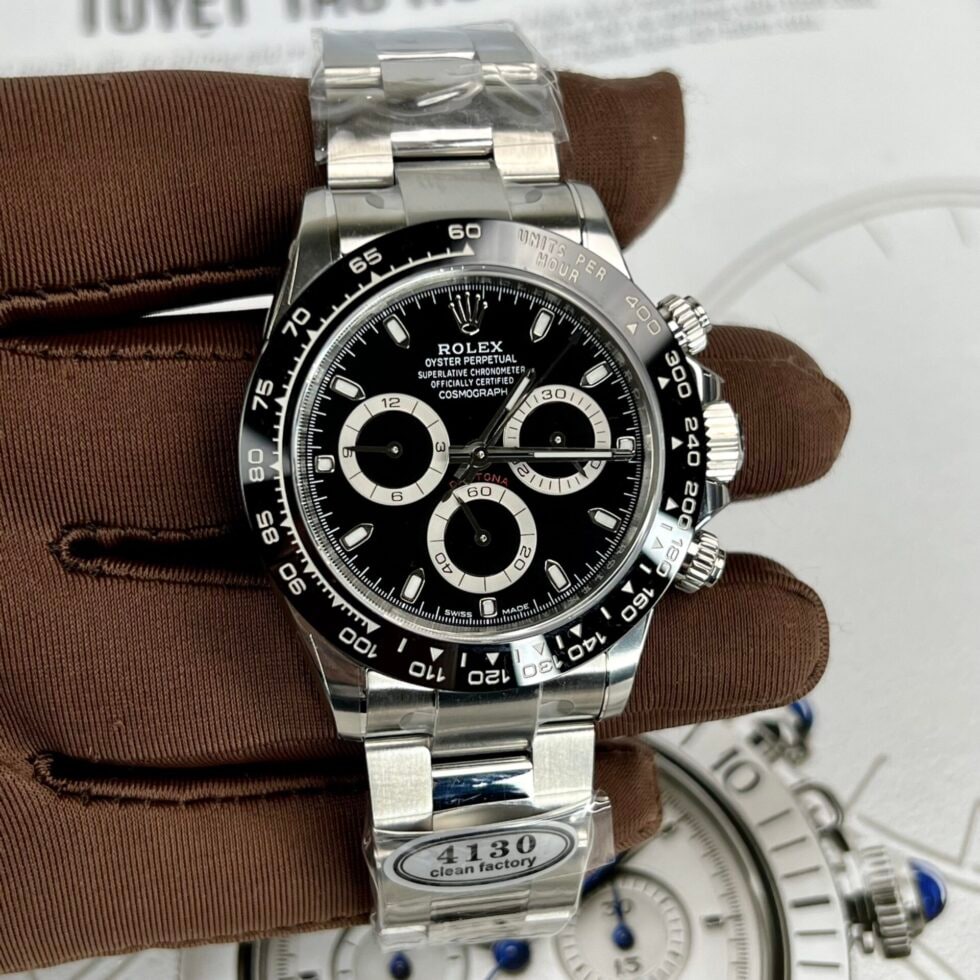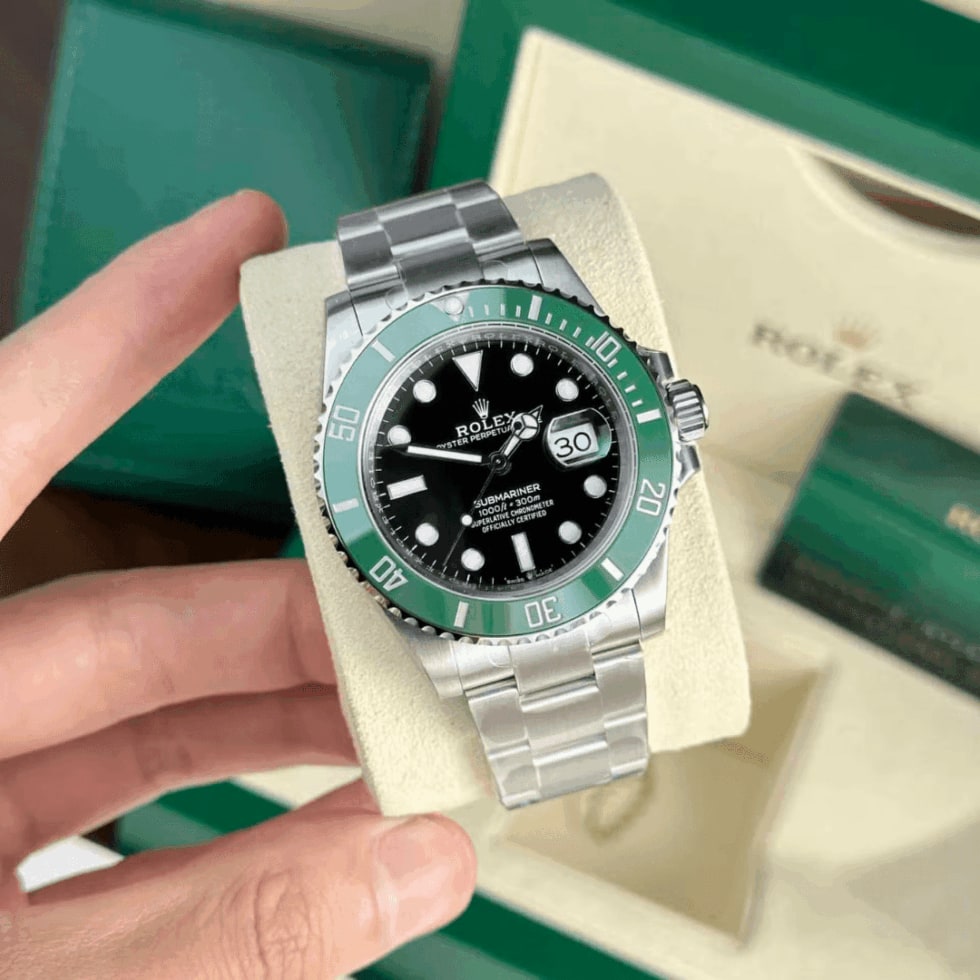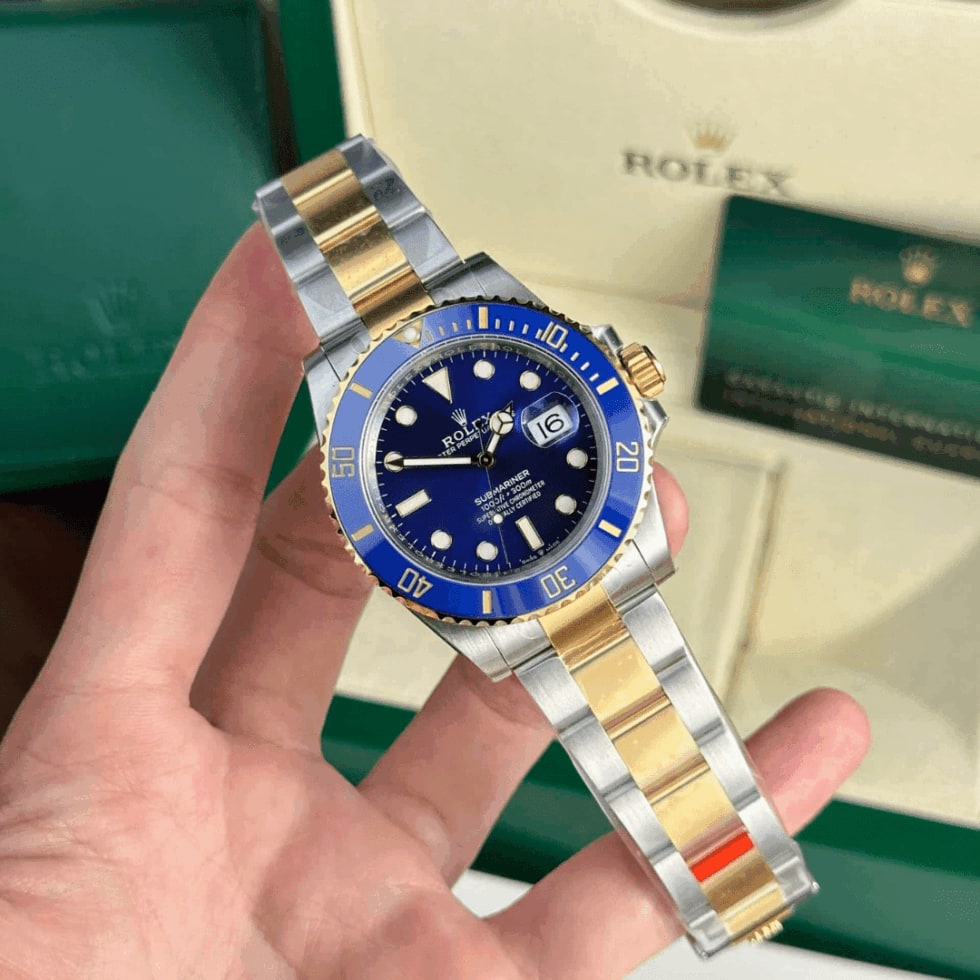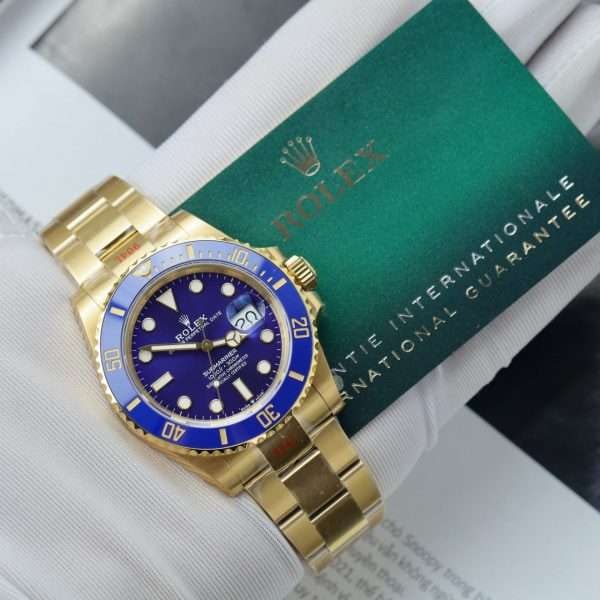
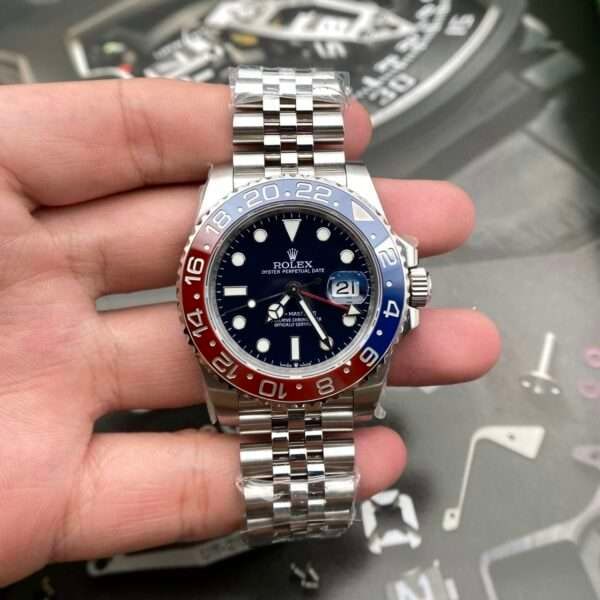
The movement is the mechanism that runs the watch and its functions. Sellers may use “clone movement” to describe a replica calibre modeled on another movement. Similar wording can describe different constructions, so ask for the calibre or family claimed for the offered watch and what evidence supports that claim.
Compare the functions you’ll use
An automatic mechanical watch winds its mainspring through wrist motion. Ask how to start it after it stops and which crown positions control the functions. For a GMT watch, ask which hand can be set independently. For a chronograph, request a short demonstration of start, stop and reset. A demonstration answers a different question from a movement photo or a calibre label.
Read a timing record in context
A timegrapher can report rate in seconds per day, amplitude in degrees and beat error in milliseconds. Check the watch position and level of wind, and ask which lift angle setting was used when comparing amplitude. Witschi describes these measurements and instrument settings in its ChronoMaster PRO documentation. Seiko’s mechanical watch explanation explains why observed rate varies with use and winding.
For power reserve, look for a timed test from a stated starting condition. Ask which service and spare parts are available for the actual movement if ongoing maintenance matters to you. Use the QC photo guide for other records to request, then compare current replica watches.